



Used Washers and Dryers Buying Guide in Citrus Heights: Everything You Need to Know Before You Buy

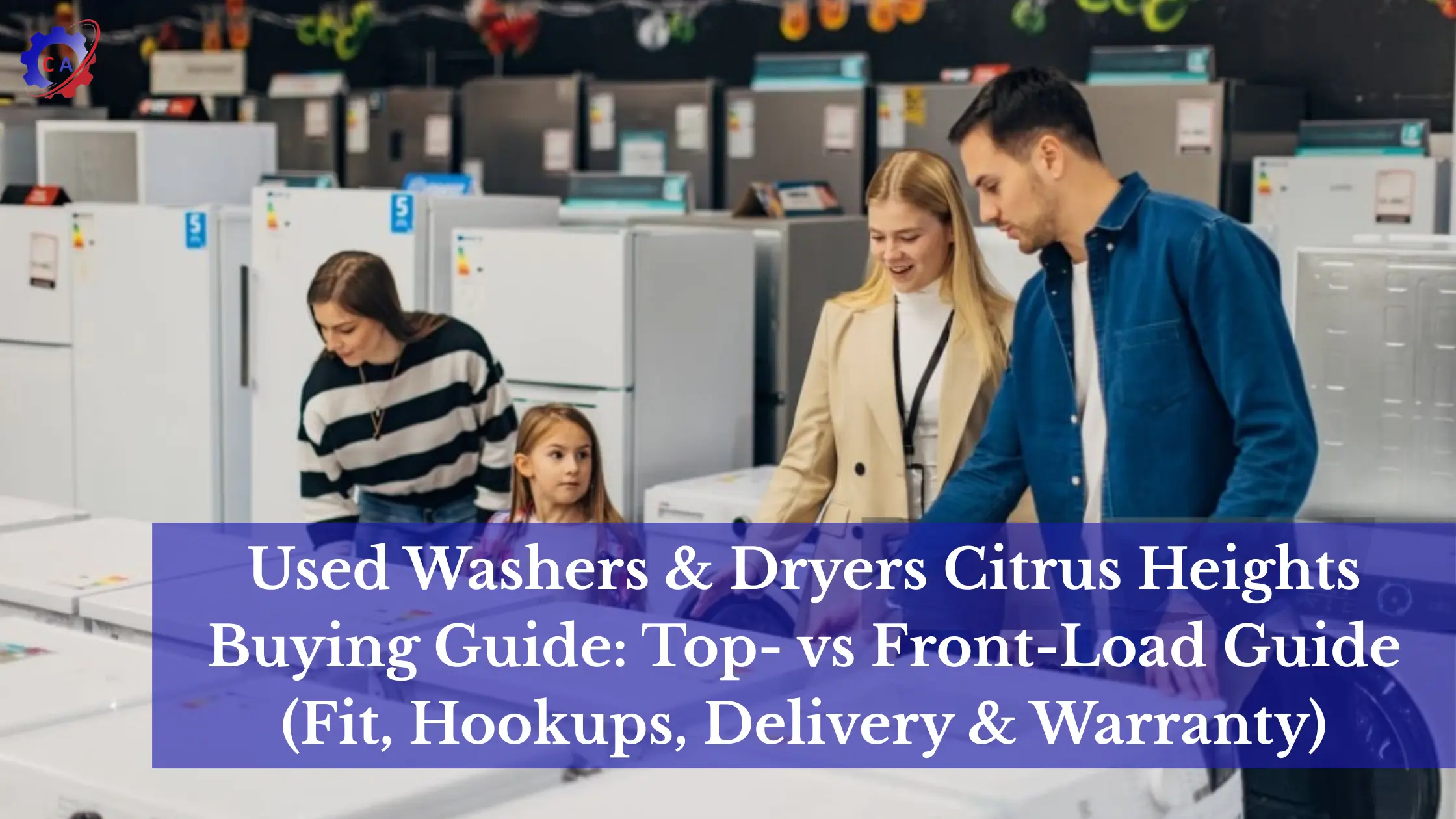
Buying used laundry units can save serious money and help you get running this week—not after a long backorder. The trick is knowing how to match fit and hookups to your home, which style actually suits your habits, and how to check a machine’s real condition in-store. This used washer and dryer Citrus Heights guide walks you through every decision, so you shop smart and buy with confidence at City Appliances, Citrus Heights Store. It covers measurements, electrical/gas/venting basics, a buyer-friendly Top- vs Front-Load comparison, and inspection checklists so you can shop with confidence.
Key Takeaways
- Buying used saves you 40 to 60 percent. A quality used set typically costs $200 to $600.
- Don’t buy any machine older than 7 to 8 years. Always confirm the age from the serial number sticker.
- Top-load washers cost less to use. Front-load washers use less water and energy in the long term.
- Agitator models clean heavy loads better. Impeller models are gentler and offer more drum space.
- Always do a visual check, a drum spin test, and a run test before you commit.
- Get your warranty in writing covering both parts and labor.
- Dryer cord type must match your outlet. Gas dryers always need a licensed hookup.
- Energy Star-certified used machines lower your utility bills over time.
Is It Worth Buying a Used Washer and Dryer?
For most people, yes. A used set costs $200 to $600 on average. A new set of comparable quality runs $800 to $2,000 or more. Those savings are immediate and real.
Older models from trusted brands are often simpler mechanically. They have fewer electronics to fail, parts are widely available, and repairs cost less. Keeping a working appliance out of a landfill is also better for the environment.
The main risks are an unknown history and the possibility of needing a repair soon after purchase. Both risks drop significantly when you buy from a store instead of a private seller — browse our used washers and dryers in Citrus Heights to see what’s currently available.
Buying used makes the most sense when you need something fast and affordable, when you’re setting up a rental or temporary space, or when you need an emergency replacement. Buying new makes more sense when you want a full manufacturer’s warranty or need a very specific long-term setup.
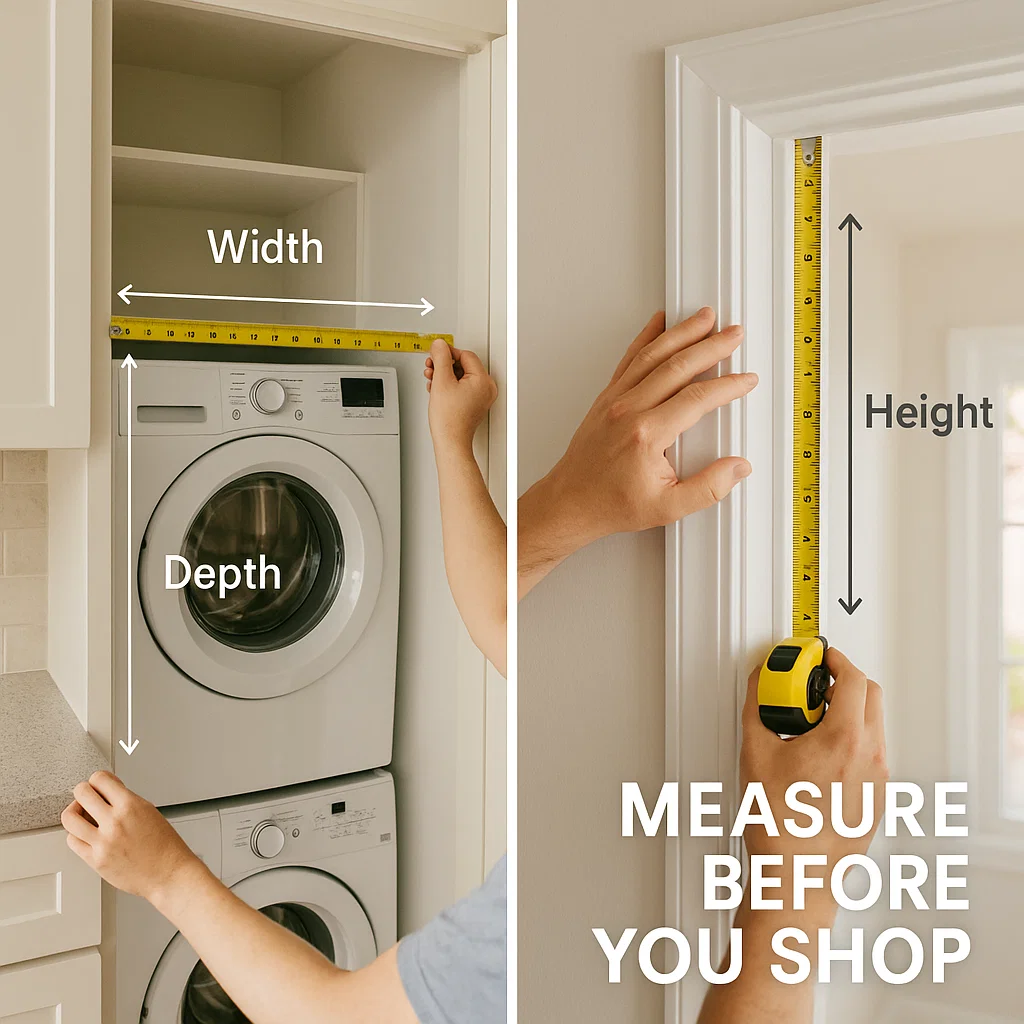
Fit & Hookups: what to measure before you shop
- Space & access:
- Laundry closet or room W × H × D, plus doorways/hallways/turns on the path.
- Stacked set clearance for doors and detergent drawer.
- Allow rear clearance for hoses/vent and front clearance for door swing.
- Washer connections:
- Hot/Cold water valves within reach; drain standpipe height ok (usually ~30–96″).
- Drip pan recommended for upstairs installs; accessible shutoff is a must.
- Dryer power/fuel:
- Electric: 240V outlet; know your cord type (4-prong newer code vs 3-prong older—cords are swappable).
- Gas: dedicated gas line with shutoff; use a licensed pro for hookup; still needs 120V outlet.
- Vent & airflow (dryers):
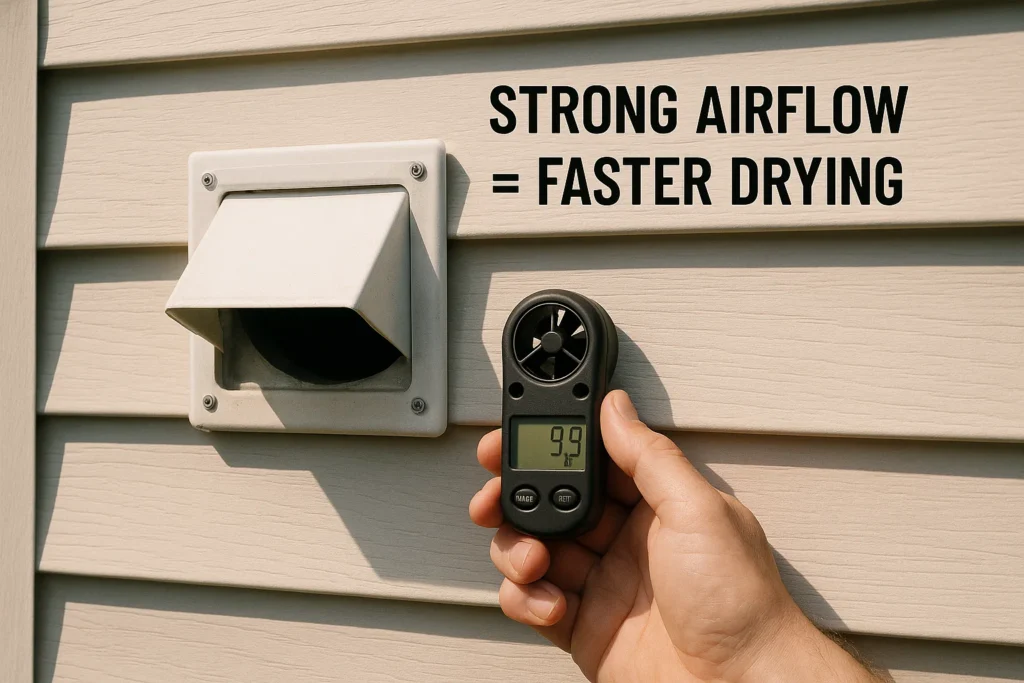
- Short, straight vent run is best; avoid crushed foil hoses.
- The outside flap should move freely; clean lint path for safety and efficiency.
Bring measurements (and hallway photos) to the store. We’ll map machines that fit—and flag any hookup changes you’ll need on delivery day.
How Old Is Too Old? The Age and Lifespan Guide
Washers typically last 10 to 14 years, and dryers last 10 to 13 years. Avoid any machine older than 7 to 8 years. At that point, you’re in the second half of its life, and wear on bearings, belts, and seals becomes unpredictable.
Every machine has a model and serial number sticker, usually found inside the door or on the back panel. The serial number almost always contains a coded manufacture date. Search the brand name plus “serial number date decoder” online to find the exact year it was made. If the sticker is missing, walk away.
Before handing over any money, also check for recalls. Search the model number on the US Consumer Product Safety Commission recall database. Some older front-load washers and certain dryer models have been subject to recall notices due to fire risks and mold-related issues. This check takes two minutes.
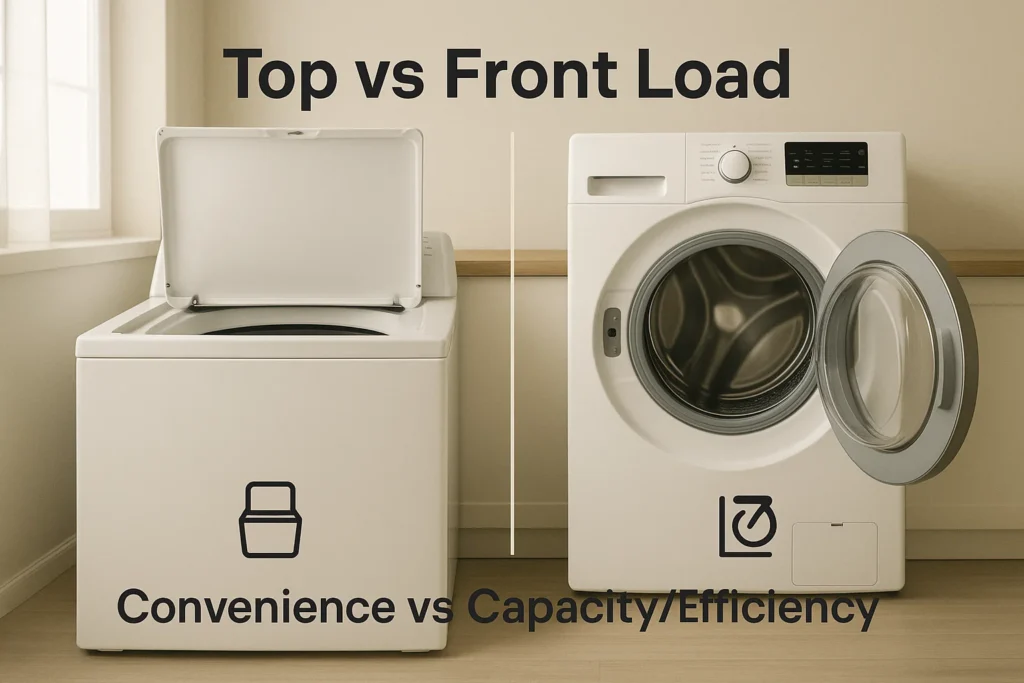
Top-Load vs Front-Load: which one’s right for you?
|
Feature |
Top-Load Washer |
Front-Load Washer |
|
Price (used) |
$100 to $250 |
$200 to $450 |
|
Water Usage |
Higher per cycle |
40–50% less per cycle |
|
Maintenance |
Simpler, easier |
Requires door-open habit |
|
Mold Risk |
Rare |
Around door gasket |
|
Fabric Care |
Harder on delicates |
Gentler |
|
Stackable |
No |
Yes |
|
Energy Star Options |
Limited |
Many certified models |
|
Best For |
Small households, everyday laundry |
Families, stackers, utility savers |
- Small household, simple laundry → Top-load is easy and durable.
- Bigger loads, better efficiency, stackable pairs → Front-load usually wins.
Agitator vs. Impeller: What’s the Difference?
|
Feature |
Agitator |
Impeller |
|
Design |
Tall central post in drum |
Low-profile disc at drum bottom |
|
Cleaning Style |
Physically scrubs clothes |
Creates rolling water current |
|
Best For |
Heavily soiled loads |
Everyday clothing |
|
Fabric Care |
Rougher on delicates |
Gentler |
|
Drum Space |
Less usable space |
More usable space |
|
Water Efficiency |
Standard |
High-efficiency, uses less water |
|
Common In |
Machines made before 2010 |
Newer models |
|
Repair Cost |
Cheaper, fewer electronics |
Slightly more complex |
Gas Dryer vs. Electric Dryer: Which Is Right for You?
|
Feature |
Gas Dryer |
Electric Dryer |
|
Hookup Needed |
Gas line + 120-volt outlet |
240-volt outlet (3 or 4-prong) |
|
Cost Per Load |
$0.15 to $0.25 |
$0.30 to $0.45 |
|
Long-Term Savings |
Higher |
Lower |
|
Availability |
Less common |
Widely available |
|
Cord Type |
Standard |
3-prong or 4-prong (swappable) |
|
Cord Swap Cost |
N/A |
$15 to $25 |
|
Installation |
Licensed professional required |
DIY-friendly |
|
Homes Built After 2000 |
— |
4-prong outlet standard |
What Capacity Do You Actually Need?
For one to two people, 3.5 to 4.5 cubic feet handles laundry comfortably. For a household of three to four people, 4.5 to 5.0 cubic feet is the right range. For five or more people, or anyone who regularly washes bulky items, aim for 5.0 cubic feet or more.
For your dryer, choose one that’s about 1.5 times the capacity of your washer. Wet laundry is heavy and needs room to tumble freely. A 4.5-cubic-foot washer pairs well with a dryer of at least 6.5 to 7.0 cubic feet. Matching the dryer’s capacity correctly reduces drying time and prevents clothes from sitting damp at the end of a cycle.
In-store inspection checklist
Washer (any style)
- Spin & suspension: Manually rotate the drum; listen for scraping. Push down front corners—excess bounce = weak suspension/feet unlevel.
- Bearings & noise: Turn the drum; rough grinding = bearing wear.
- Agitator/impeller (top-load): Check for cracks/looseness.
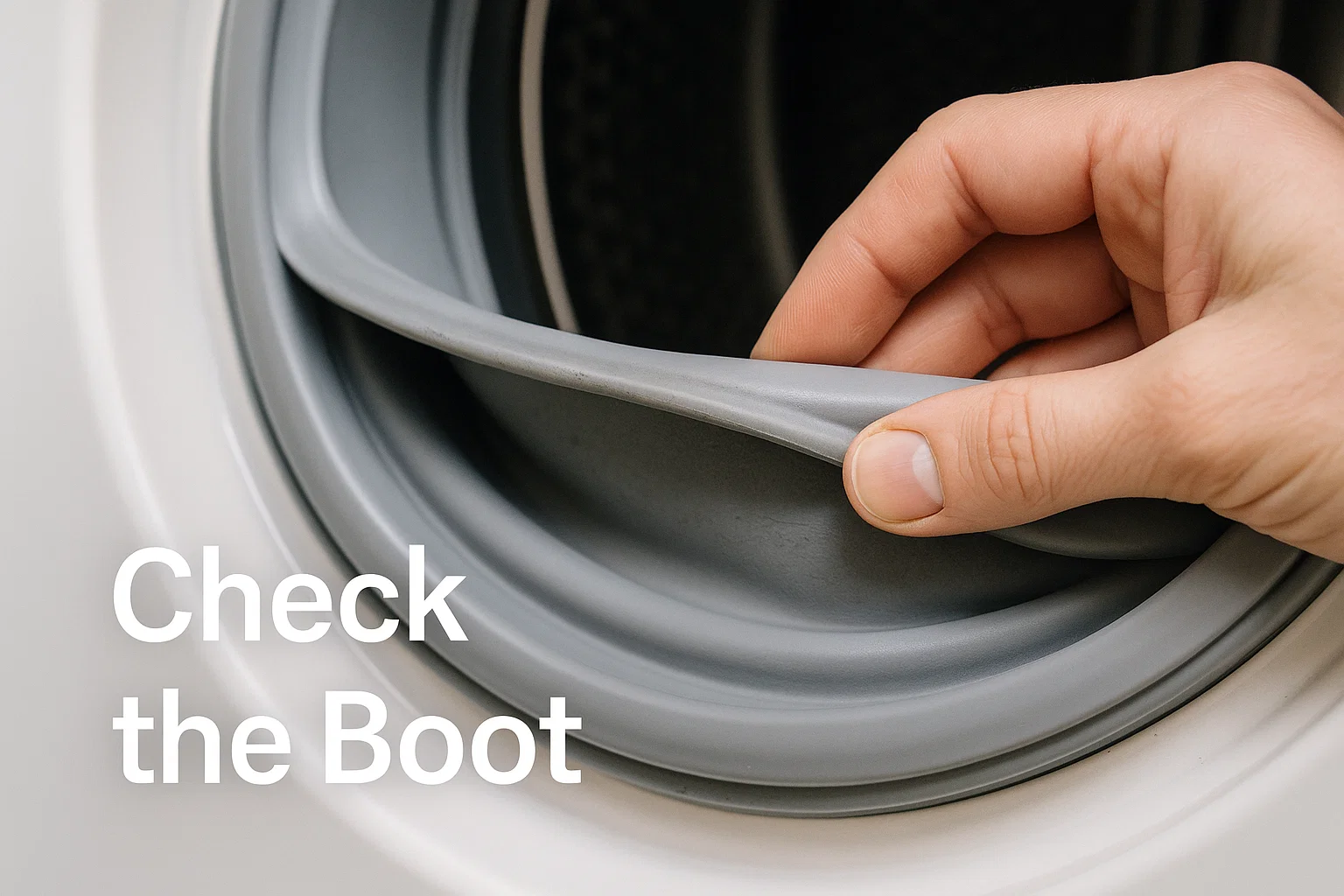
- Door boot/gasket (front-load): Inspect for mold/tears; gently pull the lip to check hidden grime.
- Fill & valves: Ask for a quick water fill demo; look for leaks at the hoses/valves.
- Drain & pump: Run a brief drain; listen for smooth pump sound, no rattling.
- Spin speed/vibration: On a quick cycle, check that it reaches spin and stays balanced.
- Hoses & clamps: Look for bulges, cracks, or rusted clamps.
- Cosmetics & odor: Interior should be clean; mild detergent scent is fine, musty isn’t.
Dryer (electric or gas)
- Heat & cycling: Confirm warm air at vent in 1–2 minutes; consistent cycling after warm-up.
- Airflow: With a vent test hood or even hand at outlet, feel strong flow; weak flow = lint path issue.
- Drum, belt & rollers: Spin by hand; listen for squeals or flat spots.
- Moisture sensor: Lightly damp cloth should extend cycle or register on sensor (if demo available).
- Lint filter & housing: Clean, seated filter; inspect cavity for heavy lint.
Most Reliable Brands for Used Washers and Dryers
Brand matters more when buying used than when buying new. Choosing a brand with simple parts, low repair costs, and wide availability of parts gives you a real safety net.
Whirlpool and Maytag are the most dependable choices on the used market. Both are built for heavy use, have straightforward mechanical designs, and have parts available nearly everywhere. Speed Queen is the most durable brand you will find, built to commercial standards and designed to last 25 years. Speed Queen units are harder to find used, but worth seeking out.
LG and GE are solid second-tier options with good reliability and wide availability. Most Kenmore washers are manufactured by Whirlpool or LG, making them a dependable choice as well. With older used Samsung models, be more careful. Older models have more electronics that can fail and parts that are harder to source.
Used vs Refurbished vs Certified Pre-Owned: What Is the Difference?
|
Feature |
Used (Private Seller) |
Refurbished (Store) |
Certified Pre-Owned |
|
Testing |
None |
Basic functionality check |
Full technician inspection |
|
Warranty |
None |
At least 30 days |
Written warranty — parts & labor |
|
Price |
Lowest |
Mid-range |
Best value for peace of mind |
|
Protection |
None |
Minimal |
Highest |
|
Worn Parts Replaced |
No |
Sometimes |
Yes |
|
Recourse if it fails |
None |
Limited |
Yes |
|
City Appliance Option |
No |
Yes |
Full inspection before sale |
Repair vs replace: when does it make sense?
- Washer: If bearings are howling or control boards fail repeatedly, replacement may beat repair on older units.
- Dryer: Elements/igniters and belts are often economical; severe airflow issues can mask bigger problems.
Need an expert quote before you decide? Fair Appliance Repair Service can diagnose costs so you can compare repair vs replacing with a tested unit.
Delivery & installation (local checklist)
- Scheduling: Ask about same-/next-day availability; confirm time window.
- Stairs/long carry: Tell us upfront so we bring the right team and gear.
- Stacking kit: Required for front-load stacks; we’ll bring compatible hardware.
- Dryer vent & cord: We’ll match 3- or 4-prong cords and set up a safe vent path (or flag if your run needs work).
- Leveling: Critical for front-loaders—reduces vibration and wear.
- Old set: Ask about haul-away options and fees.
- Final check: Test for leaks, proper spin/heat, and good airflow before we leave.
Warranty & after-support
From a reputable store, expect coverage of 30 to 90 days. Some offer up to a full year on certified units. A good warranty covers both parts and labor. Under Federal warranty law (FTC), written warranties must clearly state what is and isn’t covered — so always ask for it in writing before you pay.
Keep your receipt, write down the model number, serial number, and purchase date, and save the store’s service number in your phone. These simple steps take two minutes and can save a lot of stress later.
Next steps
You now have everything you need from this used washer and dryer buying guide to shop with confidence. You know which type fits your home, how to check age and condition, what to inspect, and what a proper installation looks like.
At City Appliance, every used and certified pre-owned washer and dryer is tested by a trained technician, comes with a written warranty, and includes same-day or next-day delivery. Bring your measurements and get in touch with our team, and we will help you find the right fit for your space and budget.
Why Trust City Appliances
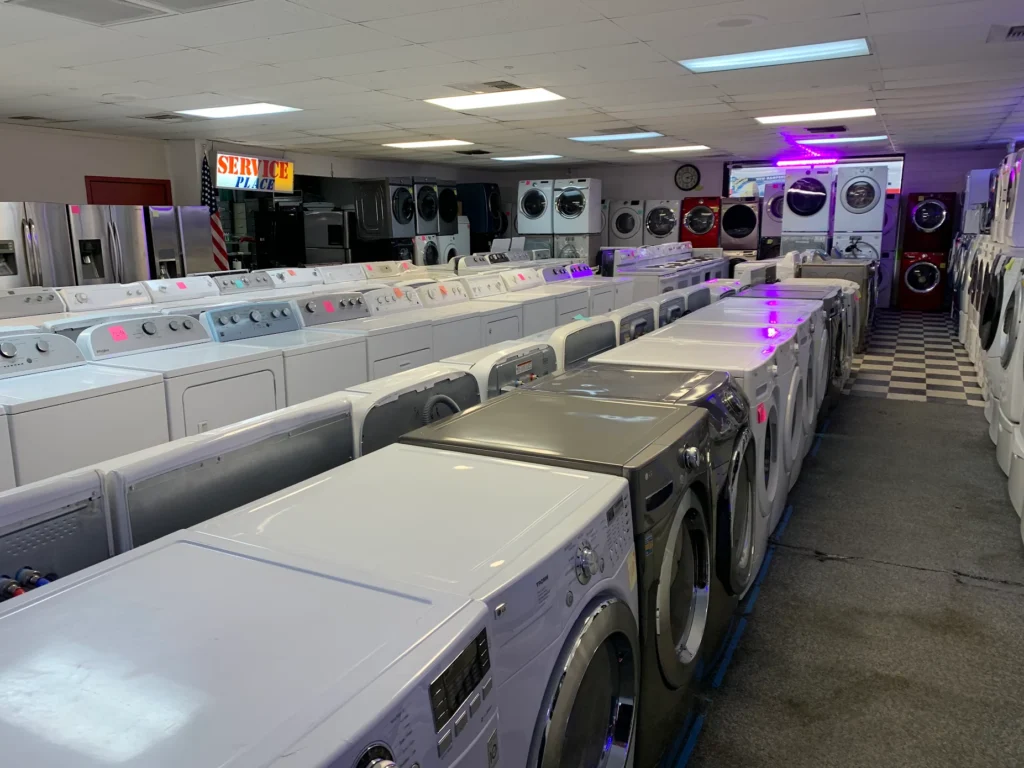
- Technician-tested inventory (spin, drain, heat, airflow, leaks)
- Same-/Next-day delivery when possible, with clear stair/long-carry rules
- Written warranty and in-store support—no “as-is” guesswork
Call us today: +1 916-501-6182 Open 7 days a week, 8AM to 6PM.
About the Author
Sayed Sadat is a senior appliance technician at City Appliances with 10+ years of hands-on experience installing and testing washers, dryers, and stacked sets across Citrus Heights, CA. He translates technician checklists into simple steps any shopper can use in-store.
Frequently Asked Questions
Q1: Can I mix washer and dryer brands?
Yes, in most cases, any matching hookup types will work together. The exception is stacking. Stacked sets must be compatible with front-load models and always need a proper stacking kit.
Q2: How do I prevent mold in a front-load washer?
Leave the door open between cycles, wipe the gasket dry after each use, use HE detergent without overdosing, and run a tub-clean cycle monthly. Overusing detergent is one of the most common causes of mold and odor in front-load washers.
Q4: Is HE detergent really necessary?
Yes. Front-load washers use much less water, so regular detergent creates too many suds. Excess suds leave residue on clothes, cause drum odors, and trigger error codes over time.
Q5: What does Energy Star mean for a used washer or dryer?
Energy Star-certified machines meet strict efficiency standards. A used front-loader with this certification uses significantly less water and electricity per cycle compared to older non-certified models.
Q6: How do I know if a used washer has worn bearings?
Spin the drum by hand. Worn bearings feel rough and produce a grinding or rumbling sound. A healthy drum spins smoothly and quietly. Bearing repairs cost $150 to $300 or more.
Q7: What should I do if there is no serial number sticker?
Do not buy it. The sticker confirms the machine’s age and lets you check for open recalls. A missing sticker usually means the machine is very old or that the information was removed intentionally. At City Appliance, every unit on the floor has a visible model and serial number sticker before it is offered for sale.