



Used front load washing machines in Citrus Heights: what to check before you buy

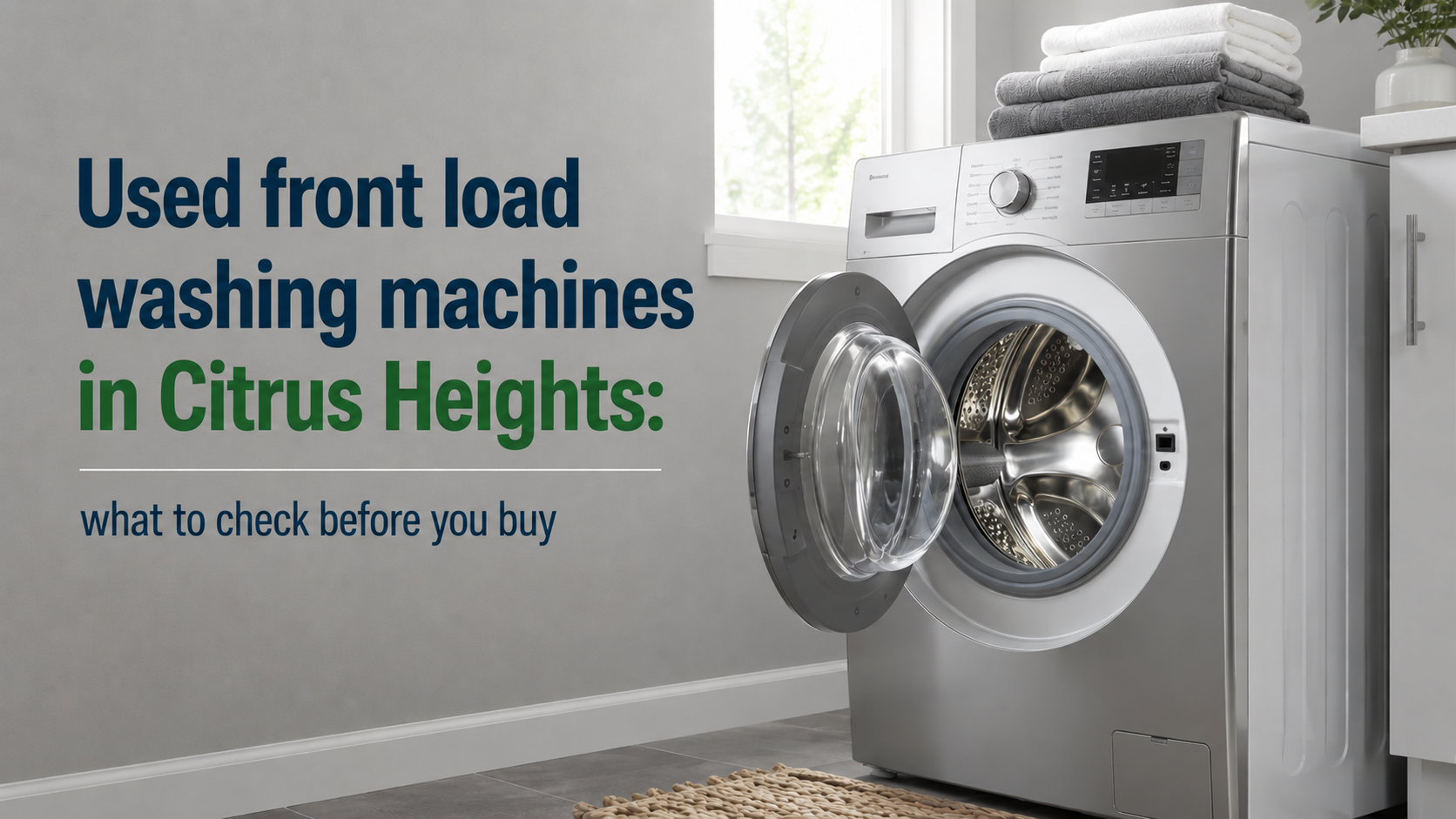
Before you buy a used front load washing machine in Citrus Heights, run a full wash and spin cycle, check the rubber door gasket for mold, listen for worn bearings, test for leaks, confirm the capacity fits your space, and buy from a local store that tests its units and backs them with a warranty. That one habit separates a 40 to 60 percent saving from a costly mistake.
TL;DR
- A good used front load washer in Citrus Heights costs 40 to 60 percent less than new and can still last 10 to 15 years, but only if it has been tested and the gasket is clean.
- The five things that catch people out: hidden mold on the door seal, worn drum bearings, leaks, wrong capacity for their space, and buying “as-is” with no warranty.
- Want a tested used front load washer with a warranty, delivery, and old-unit haul-away in Citrus Heights? Call City Appliances at 916-501-6182 or visit us at 8038 Greenback Ln, Citrus Heights, CA 95610.
Note: confirm your real warranty length and final internal link URLs before publishing.
Used, refurbished, or scratch-and-dent: what’s the difference?
These three labels mean very different things, and the price gap between them hides the risk. Knowing which one you’re looking at is the first real step in any used front load washer buying guide.
As-is used is what you find on Craigslist, OfferUp, and Facebook Marketplace. The seller hasn’t tested it, repaired it, or guaranteed anything. The price looks great because the risk is entirely yours. A second hand washing machine in Citrus Heights sold this way might run for years or fail the week after you carry it up the stairs.
Refurbished means a shop has tested the machine, replaced worn parts, cleaned the drum and gasket, and put a warranty on it. A refurbished front load washer in Citrus Heights costs a little more than a raw marketplace unit, and that gap is the cost of someone else absorbing the risk for you.
Scratch-and-dent units are usually near-new machines with a cosmetic ding from shipping or the showroom floor. The dent is on the side panel where nobody will ever see it once the washer is installed. Mechanically these are often the best value of all, which is why our scratch-and-dent appliances in Citrus Heights tend to sell fast.
Once you know which category you’re shopping, the next question is whether a used front load washer is the right call for you at all.
Is it worth buying a used front load washer?
Yes, buying a used front load washer is worth it for most Citrus Heights households, as long as the unit is tested and you buy it with some form of warranty. A good front load washer lasts 10 to 15 years, so a three-year-old machine still has most of its life ahead of it at roughly half the price of new.
Here’s who benefits most. Renters who don’t want to spend new-appliance money on a unit they may leave behind. Landlords outfitting a rental who need something durable and easy to service. First-time homebuyers stretching a budget after closing. And anyone whose old washer just died and who needs a replacement this week, not in three months.
The honest counterpoint is this: a used front load washer is only a bargain if it works. Buy one blind, with a hidden mold problem or worn bearings, and the repair bill erases the saving. That risk is real, and it’s exactly why the inspection steps below matter so much. If you’re still torn between buying new and buying used, our new vs used washing machine buying guide lays out the math. It’s also why the front load versus top load question comes up before you even look at a specific machine
Front load vs top load: which used washer is the better buy?
For most buyers, a used front load washer is the better long-term value because it cleans with less water, holds more laundry, and lasts as long as a top load, but it carries one real downside the top load doesn’t: a higher risk of mold. That trade-off is the whole front load vs top load decision in a sentence.
| Factor | Used front load | Used top load |
| Capacity | Larger (often 4.5+ cu ft) | Smaller on average |
| Water and energy use | Lower | Higher |
| Mold and odor risk | Higher | Lower |
| Typical lifespan | 10 to 15 years | 10 to 15 years |
| Price (used) | Slightly higher | Slightly lower |
The mold gap is not a rumor. Consumer Reports has found that front load washer owners report mold or mildew at far higher rates than top load owners, driven by the tight door seal that traps water after each wash. That single difference shapes the front load vs top load mold problem and makes the gasket the most important thing you’ll inspect. We compare the two head to head in our front load vs top load washer guide for Sacramento.
So if a used front load washer’s capacity and efficiency win you over, the next move is knowing exactly what to check before you hand over any money.
What to check before you buy a used front load washer: the 9-point checklist
The single most important rule when buying a used front load washing machine is to run it through a full cycle before you pay. Most serious faults stay invisible until the machine fills, agitates, and spins. Here is the checklist to inspect a used front load washer the way a technician would.
1. Run a full wash and spin cycle. Never buy a washer you haven’t seen run. Fill it, let it agitate, and take it all the way through the spin. This single test reveals leaks, balance problems, and bearing noise that a powered-off machine hides completely.
2. Inspect the rubber door gasket for mold and mildew. Peel back the folds of the rubber seal and look for black spots and a musty smell. This is the number one problem with used front loaders, and a moldy gasket means either a deep clean or a replacement part.
3. Listen to the spin cycle for worn bearings. A loud grinding or roaring sound on high spin usually means worn drum bearings, one of the most expensive front load repairs. A healthy machine spins with a steady hum, not a growl.
4. Check for leaks and inspect the hoses. Look under and behind the unit during the cycle for water. Check the fill and drain hoses for cracks and the drain pump area for drips.
5. Look for error codes, rust, and drum damage. Run a diagnostic cycle if the seller knows how, watch for fault codes on the display, and shine a light inside the drum for rust, cracks, or loose objects.
6. Test the door lock and latch. A front load washer won’t start if the door lock fails, and the lock is a common point of failure. Open and close it several times and confirm the machine recognizes the door as shut.
7. Confirm capacity and measure your space. Front load washers run deep, often 30.25 to 34.5 inches, so measure your doorways, hallway, and laundry area before you buy. You’ll want at least 4.5 cubic feet of capacity to wash a king-size comforter in one load.
8. Decode the serial number to check the real age. Sellers don’t always know how old a machine is. The serial number tells you the build date, and an honest age changes how much life is left and what it’s worth.
9. Ask the seller the right questions. How old is it, how heavily was it used, why are you selling, has it ever been repaired, and is there any warranty? Vague or evasive answers are a sign to walk away.
Print this nine-point list and take it with you. And once you know what to check, you also need to know the warning signs that mean you should skip a machine entirely.
Red flags when buying a used washer (and how to avoid scams)
The clearest red flag with any used washing machine is a seller who won’t let you run it before you pay. If the machine “can’t be tested right now,” the power is conveniently off, or the unit was just hauled out of a garage and can’t be plugged in, treat that as a no.
Other signs a used washing machine is bad news: a fresh coat of paint hiding rust, a missing or scratched-off serial number, a price far below everything else for the same model, “cash only and it’s gone today” pressure, and no return or warranty of any kind. None of these on their own prove a scam, but two or more together mean the risk has shifted entirely onto you.
If you do shop a marketplace, meet in a safe spot, insist on seeing the washer run a full cycle on site, and never send money before you’ve watched it work. Our guide on how to spot a high-quality used appliance walks through the rest. The safest path is simply to buy from a used appliance store with a warranty near you, where the testing has already been done. The most common hidden defect those red flags point to is mold, so it’s worth understanding exactly where it lives.
Why do front load washers smell, and how to check for it
Front load washers smell because the tight rubber door seal traps water after every wash, and that warm, damp pocket grows mold and mildew. It’s the most common complaint about front loaders, and on a used machine it’s the first thing to inspect.
Where the mold hides. Three places: the folds of the rubber door gasket, the detergent drawer, and the underside of the drum lip. Pull the gasket back gently and check the lowest point of the fold, where water pools and black mold collects first.
How to check a used unit before buying. Open the door and take a deep breath at the opening. A strong musty or mildew smell means mold is already established. Then run your finger along the inside of the gasket fold. If it comes back gray or black, you’re looking at a cleaning job at best and a gasket replacement at worst.
How to prevent and fix it. Leave the door ajar between loads so the drum dries out. Run the tub-clean cycle monthly, or a hot wash with no laundry if the machine has no tub-clean setting. Use only HE detergent, and use less than you think, since excess soap feeds the buildup. These habits keep a used front load washer’s mold problems from coming back.
A clean gasket on a reliable brand is the combination you want, which brings up the question of which used front load brands actually hold up.
The most reliable used front load washer brands
The most reliable used front load washer brands are LG, Speed Queen, Whirlpool, Maytag, and GE, with Kenmore close behind. These brands hold up over time and, just as important for a used buyer, are cheaper and easier to get parts for when something does need fixing.
| Brand | Reliability as a used buy | Notes |
| LG | Very strong | Consistently top-rated for front load reliability |
| Speed Queen | Excellent, longest-lasting | Built commercial-tough, often outlives the average |
| Whirlpool | Strong | Common parts, affordable repairs |
| Maytag | Strong | Durable, good used resale value |
| GE | Good | Most last 10 to 15 years with care |
| Kenmore | Good | Often rebadged Whirlpool/LG, easy to service |
It’s worth being cautious with off-brand or very feature-heavy models where control boards fail and replacement parts are scarce or costly. When in doubt, a simpler machine from a proven brand beats a loaded one from a name you don’t recognize.
That covers how long a used front load washer lasts and which brands to trust. The next question every buyer asks is what it actually costs to own one.
What a used front load washer really costs to own
The sticker price is only part of what a used front load washer costs. Over its life, you also pay for energy, water, detergent, and the occasional repair, and front loaders win on the first three.
A front load washer uses noticeably less water and energy than an older top load agitator, which shows up on your Sacramento-area utility bills month after month. According to ENERGY STAR, certified washers use significantly less water and electricity than standard models, and a front loader’s high spin speed pulls more water out of each load, so the dryer works less too.
On the repair side, budget for the parts that wear: the door lock, drain pump, shock absorbers, and on older units the drum bearings. Most of these are modest repairs on a mainstream brand like Whirlpool or Maytag and expensive on an obscure one, which is exactly why brand choice matters for a used buyer. Factor those costs in and you can see why the right used front load washer still beats new on total value, especially once you know the fair price to pay.
How much should you pay for a used front load washer in Citrus Heights?
A used front load washer in the Citrus Heights and Sacramento area generally runs a fraction of new, with most tested units landing well below retail and saving buyers 40 to 60 percent. The exact price depends on the brand, the age, the condition, and whether it comes with a warranty.
What raises the price: a newer build year, a reliable brand like LG or Speed Queen, larger capacity, and a real warranty with delivery included. What lowers it: cosmetic wear, an older model, an off-brand name, or an “as-is” sale with no guarantee. For wider context on local pricing, our used appliances Sacramento buying guide covers the whole market. The average price for a used washer and dryer set in Sacramento sits higher than a single unit, but buying the pair together usually costs less than buying each on its own.
Be wary of anything priced far below the rest of the market. On a used front load washer, a price that looks too good usually means a problem the seller already knows about. Paying a bit more for a tested machine with a warranty is almost always cheaper in the long run, and it matters even more when you’re buying a matched set.
Buying a used washer and dryer set
Buying a used washer and dryer together in Citrus Heights usually costs less than buying each separately, and it spares you the hassle of matching two units later. There are a few things to settle before you commit to a set.
First, gas or electric dryer. A gas dryer needs a gas hookup, an electric dryer needs a 240-volt outlet, and you can’t swap one for the other without adding the right connection. Check what your laundry space already has. Second, stacked or side by side. If your space is tight, a used stackable washer and dryer saves floor area, but the two units have to be compatible to stack safely. Third, the dryer needs the same inspection mindset as the washer: run it, feel for heat, and check that the drum turns smoothly and the vent connection is clean.
Get the set right and the only thing left is making sure the people you buy from stand behind it, which is where a local store earns its keep.
How our used front load washers are tested before sale
Every used front load washing machine we sell at City Appliances is tested and cleaned before it reaches the floor, so the inspection work above is already done for you. This is the difference between a refurbished machine and a gamble off a marketplace listing.
Our process covers the points that matter most on a front loader. We run each machine through full cycles to confirm it fills, agitates, drains, and spins without leaks or bearing noise. We clean and sanitize the door gasket and drum so there’s no trapped mold or odor. We check the door lock, hoses, and pump, and we replace worn parts before the unit is listed. Then we back it with a warranty so you’re covered if something turns up later.
That testing is the reason buying from a local store beats taking your chances on Craigslist or OfferUp, and the comparison makes the gap obvious.
Why a local store with a warranty beats Craigslist and OfferUp
Buying a used front load washer from a local store with a warranty protects you in a way a Craigslist or OfferUp listing never can: the machine has been tested, it’s covered if it fails, and someone will deliver it and take your old one away. An “as-is” private sale offers none of that, a point we break down further in our look at buying locally versus buying online.
| Local store (City Appliances) | Craigslist | OfferUp | Facebook Marketplace | Big-box open-box | |
| Tested before sale | Yes | No | No | No | Sometimes |
| Warranty | Yes | No | No | No | Limited |
| Delivery | Yes | Rarely | Rarely | Rarely | Yes (fee) |
| Old-unit haul-away | Yes | No | No | No | Sometimes |
| Service after the sale | Yes | No | No | No | Limited |
The savings on a marketplace unit look bigger until the first repair. A used appliance store with a warranty near you turns a risky purchase into a predictable one, and for most Citrus Heights buyers that peace of mind is worth the small price difference. The warranty is only half of it though. The other half is getting the machine installed correctly.
Delivery, installation, and haul-away in Citrus Heights
A used front load washer should arrive installed and level, with your old unit hauled away, not left on your driveway in a box. Proper delivery matters more on a front loader than most people expect.
Front load washers vibrate hard on the spin cycle, so they have to sit perfectly level or they’ll walk across the floor and wear out faster. The shipping bolts that protect the drum in transit must come out before the first wash, and the water and drain lines have to be connected and leak-checked. This is also the moment to recycle your old machine responsibly instead of letting it sit. City Appliances handles washer and dryer delivery in Citrus Heights, levels the unit, and takes the old one with us.
Done right, washer installation in Citrus Heights takes the whole headache off your plate, which is especially valuable for the buyers who need the most reliable setup with the least fuss: renters and landlords.
Best used washers for renters and landlords
For renters and landlords, the best used front load washer is a durable, easy-to-service model from a brand like Whirlpool, Maytag, or Speed Queen, bought with a warranty. Durability and cheap repairs matter more than features when a machine has to survive heavy or shared use.
Landlords furnishing a Citrus Heights rental should lean toward simple, proven units where parts are common and a service call is quick and affordable. A warranty matters even more here, because downtime on a rental washer means a tenant complaint. Renters who want their own machine should look for the same reliability in a second hand washing machine they can move without much weight or fuss. For both, a tested unit with support behind it beats the cheapest listing every time, no matter which nearby city you’re shopping from.
Where to buy a used front load washer near Citrus Heights
You can buy a tested used front load washer for sale in Citrus Heights and the surrounding Sacramento communities from City Appliances, with delivery across the area. We serve buyers looking for used appliances in Citrus Heights, CA and the nearby cities.
That includes a used front load washer in Roseville, a used washing machine in Orangevale, a used washer and dryer in Antelope, and refurbished appliances in Fair Oaks and Carmichael. Whether you need a single washer or a full used washer and dryer set in Sacramento, buying local means you get the unit tested, delivered, and backed by a warranty rather than shipped sight-unseen. Browse our washer and dryer inventory, or call 916-501-6182 to see what’s in stock this week. Before you go, here are the questions buyers ask us most.
Ready to buy a tested used front load washer in Citrus Heights?
Skip the marketplace gamble. City Appliances sells tested, warrantied used front load washing machines in Citrus Heights, with delivery, installation, and old-unit haul-away across Roseville, Orangevale, Antelope, Fair Oaks, and Carmichael. Call 916-501-6182, contact us online, or visit 8038 Greenback Ln, Citrus Heights, CA 95610 to see this week’s inventory.
Frequently asked questions
Are used front load washers worth buying?
Yes, a used front load washer is worth buying when it’s been tested and comes with a warranty. A good unit lasts 10 to 15 years, so a lightly used machine gives you most of that life at 40 to 60 percent off new. The risk only shows up when you buy one blind with no testing.
What should I check before buying a used front load washer?
Run a full wash and spin cycle, check the rubber door gasket for mold, listen for grinding bearings on spin, look for leaks, confirm the capacity fits your space, test the door lock, and ask the seller about the machine’s age and repair history. Never buy one you haven’t seen run.
Why do front load washers smell, and can it be fixed?
Front load washers smell because the door seal traps water and grows mold and mildew. It’s fixable: clean the gasket, run a hot tub-clean cycle, leave the door ajar between loads, and use only HE detergent in small amounts. On a used machine, inspect the gasket before you buy.
How long does a used front load washer last?
A front load washer lasts about 10 to 15 years with normal care, and brands like Speed Queen often last longer. A three or four year old used machine still has the majority of its lifespan left.
How long is the warranty on a used washer?
Warranties on used washers from local stores typically run from 90 days up to a year on parts and labor, depending on the store. Always confirm the exact length and what it covers before you buy. An as-is marketplace unit comes with no warranty at all.
Front load or top load: which used washer is better?
A used front load washer cleans with less water, holds more, and lasts as long as a top load, but it carries a higher mold risk because of the door seal. If you’ll keep the gasket clean and want efficiency and capacity, front load wins. If low maintenance is the priority, a top load is simpler.
How much should I pay for a used front load washer in Sacramento?
Expect to pay a fraction of new, with most tested used front load washers in the Sacramento and Citrus Heights area saving you 40 to 60 percent. Price depends on brand, age, condition, and whether a warranty is included. A unit priced far below the rest usually has a problem.
Is it safe to buy a used washer on Craigslist or OfferUp?
It can be, but the risk is entirely yours. Always test the machine through a full cycle on site, check the gasket for mold, and never pay before you see it run. For a tested unit with a warranty, delivery, and haul-away, a local used appliance store is the safer choice.