



How to hook up a gas dryer in Sacramento: what to know before buying

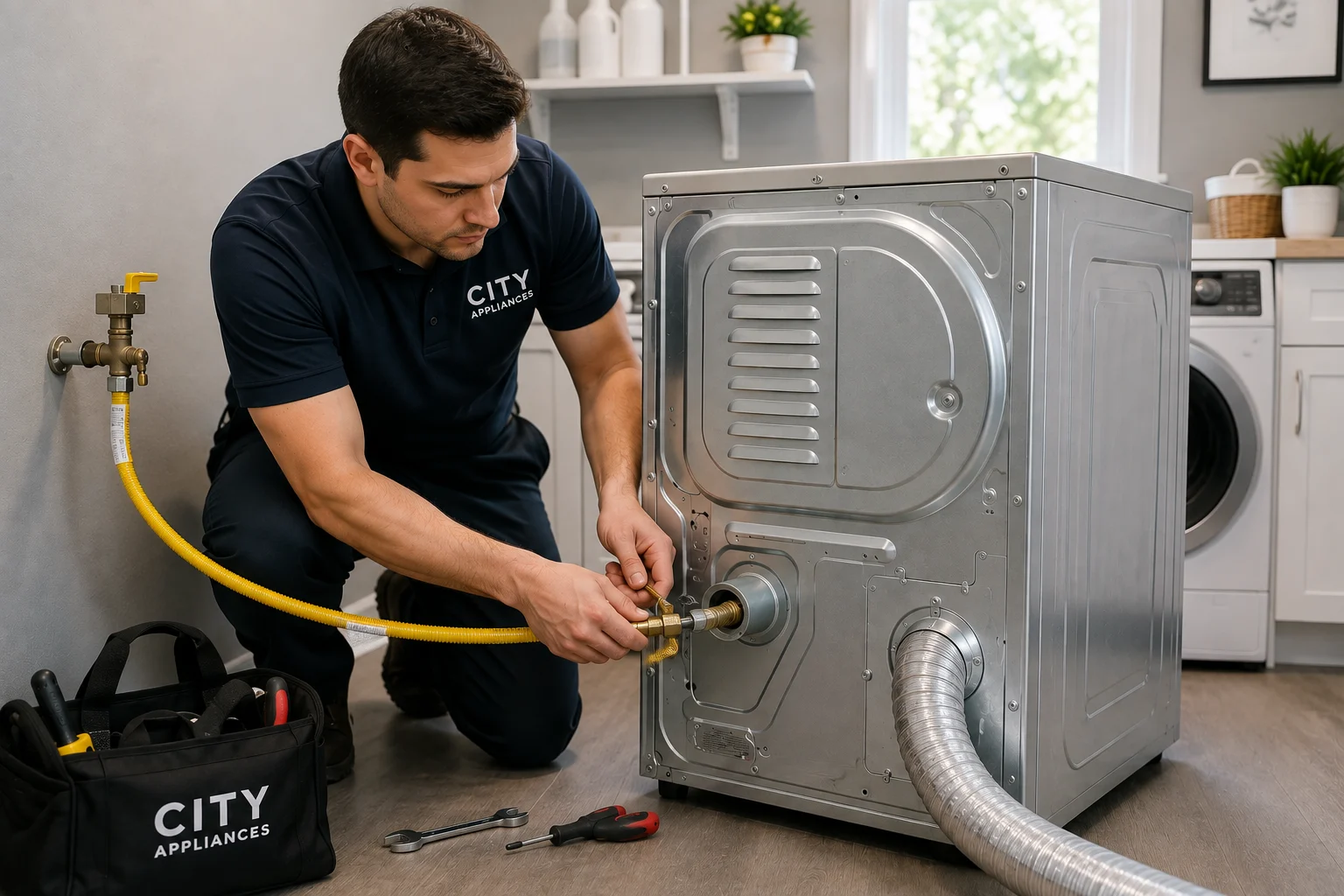
A gas dryer connects to a standard 120V outlet, not the 240V outlet an electric dryer needs, plus a dedicated gas line with a flexible connector. Gas line installation alone runs $200 to $600 in the Citrus Heights area, and full professional installation with labor typically totals $760 to $1,650. Confirm your home already has a gas line before you buy, and check current local rules if you’re installing in new construction.
Key takeaways
- A gas dryer needs only a standard 120V outlet. The gas line supplies the heat; electricity just runs the drum motor and controls.
- Gas line installation alone typically runs $200 to $600 in the Citrus Heights area. Full professional installation with labor runs $760 to $1,650.
- Every gas connection needs a soapy-water leak test before you run the dryer for the first time.
- Use rigid or semi-rigid metal venting only. Flexible plastic venting is a fire hazard and shouldn’t be used on a gas dryer.
- Neither PG&E nor SMUD currently offers a rebate specifically for gas, electric, or heat pump clothes dryers.
- Sacramento’s building electrification rules target space and water heating, not dryers specifically, and apply to the City of Sacramento rather than Citrus Heights.
- City Appliances carries LG, Samsung, GE, Whirlpool, and Frigidaire gas dryers in new, used, and scratch-and-dent condition, with professional installation and a gas line inspection included.
Table of contents
- Does a gas dryer need a 240V outlet?
- What do you need before hooking up a gas dryer?
- How do you connect the gas line to a gas dryer?
- How do you vent a gas dryer?
- How much does it cost to hook up a gas dryer in Sacramento?
- What should you check locally before buying a gas dryer in Sacramento?
- Where can you buy a gas dryer with installation included in Citrus Heights?
- FAQ
Does a gas dryer need a 240V outlet?
No. A gas dryer plugs into a standard 120V household outlet, the same kind used for most small appliances. Electricity in a gas dryer only powers the drum motor, controls, and igniter; the gas line itself supplies the heat that dries your clothes. That’s the opposite of an electric dryer, which needs a dedicated 240V, 30-amp outlet to run its heating element directly off electricity.
This distinction catches buyers off guard in both directions. Someone replacing an electric dryer with a gas model may assume they still need the 240V outlet, and someone replacing a gas dryer with an electric one often discovers their laundry room only has a 120V outlet installed. If you’re weighing gas against electric, it’s worth reading through what a 240V outlet for an electric dryer actually requires before you decide, since the electrical setup is one of the biggest differences between the two.
What do you need before hooking up a gas dryer?
Confirm five things before you bring a gas dryer home: an existing gas line and shutoff valve within reach of the installation spot, a standard 120V grounded outlet, a clear vent path to the exterior, a new flexible gas connector (never reuse an old one), and pipe thread compound or Teflon tape rated for gas connections.
- Gas line and shutoff valve. The valve should be within about six feet of where the dryer will sit.
- 120V outlet. Check that it’s grounded and in good condition; older homes sometimes need an outlet replaced or added.
- Vent path. Measure the shortest realistic route to an exterior wall or roof vent.
- New flexible connector. Gas connectors aren’t meant to be reused between installations.
- Pipe thread compound or gas-rated Teflon tape. Regular plumber’s tape isn’t rated for gas connections.
If any of these five is missing, especially the gas line itself, budget for that separately before you commit to a gas dryer purchase.
How do you connect the gas line to a gas dryer?
Connecting a gas dryer means shutting off the gas supply, attaching a new flexible connector between the dryer and the wall valve, sealing every threaded joint, and testing for leaks before you turn the gas back on.
- Turn off the gas at the shutoff valve near the connection point, and switch off the dryer’s circuit breaker.
- Apply pipe thread compound or gas-rated tape to every threaded connection.
- Attach the flexible connector to the dryer’s gas inlet, hand-tighten first, then finish with an adjustable wrench.
- Connect the other end of the connector to the wall gas valve.
- Turn the gas supply back on slowly.
- Mix a simple soapy water solution and brush it over every connection point. Bubbles mean a leak; if you see any, shut the gas off, retighten, and retest.
- Once every connection tests clean, move on to venting.
Skipping the leak test is the single most common mistake in a DIY gas dryer hookup, and it’s the one step every professional installer treats as non-negotiable.
How do you vent a gas dryer?
A gas dryer vents through rigid or semi-rigid metal ducting to the outside, never through flexible plastic or foil tubing, which can trap lint and become a fire hazard. Attach the vent to the dryer’s exhaust port, run it by the shortest practical path to an exterior wall or roof cap, and secure every joint with metal clamps or foil tape rated for dryer venting.
Keep the run as short and straight as possible. Every additional bend in the vent path reduces airflow and increases drying time, which matters even more for a gas dryer since restricted venting can also affect combustion. Once the vent is secure and the exterior cap is clear of obstructions, plug the dryer into its 120V outlet, restore power at the breaker, and run a short test cycle to confirm both heat and airflow are working before you consider the hookup finished.
How much does it cost to hook up a gas dryer in Sacramento?
Gas line installation alone typically runs $200 to $600 in the Citrus Heights area, and full professional installation, including the dryer’s setup and labor, runs $760 to $1,650 nationally according to Angi’s 2026 cost data, with materials adding another $30 or more.
| Cost item | Typical range |
| Gas line installation only (Citrus Heights) | $200 to $600 |
| Full professional installation with labor (national, Angi) | $760 to $1,650 |
| Materials and connector kit | $30 and up |
If your home already has an existing, working gas line to the laundry area, you’re only paying for the connector, venting, and labor to hook up the dryer itself, well under the high end of that range. If a gas line needs to be run for the first time, budget toward the higher end. Every gas dryer purchased through City Appliances includes professional installation with a gas line inspection, so you know upfront whether your existing line is ready to go.
What should you check locally before buying a gas dryer in Sacramento?
Check with your local building department before installing a gas dryer in new construction, since neither PG&E nor SMUD currently offers a rebate for gas, electric, or heat pump dryers, and Sacramento’s building electrification rules are still evolving.
Neither utility singles out clothes dryers in its current rebate programs. SMUD’s home appliance rebates cover induction cooktops, heat pump water heaters, and ENERGY STAR washers and refrigerators, but dryers of any type aren’t listed. PG&E’s rebates and incentives page shows the same pattern: no dryer-specific program.
On the construction side, the City of Sacramento has been working toward a long-term building electrification strategy, targeting space and water heating rather than dryers or stoves specifically, with a timeline stretching out to 2045. An earlier mandate requiring new construction to be all-electric was paused by a federal appeals court ruling shortly after it took effect. That strategy applies to the City of Sacramento specifically; nothing in the current rules indicates Citrus Heights has adopted a similar requirement. Rules like these vary by city and can change, so if you’re installing a gas dryer in new construction anywhere in the Sacramento area, a quick check with your local building department is worth the five minutes it takes.
Where can you buy a gas dryer with installation included in Citrus Heights?
City Appliances, at 8038 Greenback Ln in Citrus Heights, carries gas dryers from LG, Samsung, GE, Whirlpool, and Frigidaire in new, used, and scratch-and-dent condition, with professional installation and a gas line inspection included on every purchase. An old dryer haul-away is available for an additional $50 if you need one taken off your hands.
Buying locally means the same technician who inspects your gas line can also confirm the specific dryer collection in stock fits your setup before delivery day, rather than discovering a mismatch after a big-box online order arrives.
The bottom line
A gas dryer hookup comes down to five checks: an existing gas line, a standard 120V outlet, a clear vent path, a new connector, and a proper leak test before you run it for the first time. Gas line work alone runs $200 to $600 in the Citrus Heights area, full installation runs $760 to $1,650, and no current PG&E or SMUD rebate applies either way. Confirm your gas line is ready before delivery day, and the rest of the hookup is straightforward.
Ready to compare gas dryers in person?
Get your gas line inspected and a certified installation included with an LG, Samsung, GE, Whirlpool, or Frigidaire gas dryer at City Appliances in Citrus Heights, in new, used, or scratch-and-dent condition. Schedule a visit or stop by, no appointment needed.
City Appliances
8038 Greenback Ln, Citrus Heights, CA 95610
Call or text: (916) 501-6182
Find us on Google Maps: https://share.google/m9flWoSAxGTIJlQbi
FAQ
Q1: Does a gas dryer need a 240V outlet?
No. Gas dryers plug into a standard 120V outlet. Only electric dryers require a dedicated 240V, 30-amp outlet.
Q2: Can I plug my gas dryer into a regular outlet?
Yes, a standard 120V household outlet is exactly what a gas dryer is designed to use. No special electrical work is needed unless your home doesn’t already have a grounded 120V outlet near the dryer location.
Q3: Will the gas company connect my dryer?
No, most gas utilities don’t send technicians to connect individual appliances. That’s handled by a licensed plumber, a certified appliance installer, or the retailer you buy from, which is why installation is included with every gas dryer purchase at City Appliances.
Q4: Can a homeowner hook up a gas dryer themselves?
It’s possible for someone comfortable working with gas line connections and comfortable performing a proper leak test, but many homeowners choose professional installation given the safety stakes of a gas connection done incorrectly.
Q5: How much will a plumber charge to hook up a gas dryer?
Gas line work alone typically runs $200 to $600 in the Citrus Heights area. Full installation including labor runs $760 to $1,650 nationally, according to Angi’s 2026 data.
Q6: What is the life expectancy of a gas dryer?
Gas dryers commonly last 10 to 13 years with normal use and basic maintenance, similar to electric models, since the drum, motor, and venting components wear at a similar rate regardless of heat source.
Q7: Can you still buy gas dryers in California?
Yes. Current rules target new construction and focus on space and water heating rather than banning the sale or replacement of gas dryers. Always confirm current requirements with your local building department if you’re installing in new construction.
Q8: Is a gas dryer better than an electric dryer?
Neither is universally better. Gas dryers typically cost slightly more upfront and need an existing gas line, but often run cheaper per load. Electric dryers cost less to buy and don’t need a gas hookup, but require a dedicated 240V outlet. The right choice depends on what your home already has installed.